Treasures of the Library
Knowing that I loved my books, he furnished me from mine own library with volumes that I prize above my dukedom" Prospero, The Tempest (Act 1, Scene 2)
An important goal of the Cambridge Digital Library is to make available substantial collections, so that researchers, teachers and life-long learners can explore a wide range of resources and uncover their own treasures. We expect the digitisation of our collections to enable interesting discoveries to be made and to open up new avenues for research. As we develop the digital library infrastructure we will look for ways of capturing and publicising new information about items held within the digital library.
However, there are many items within the Library’s collections that already deserve highlighting. This may be because of their historical importance, uniqueness, beauty, fascinating content, or perhaps their personal associations. In this special collection within the Cambridge Digital Library we will draw together books, manuscripts and other items from across our collections that are especially significant. Many of them have been displayed in Library exhibitions in the past – now they can be accessed at any time, from anywhere in the world, and browsed cover to cover.

-
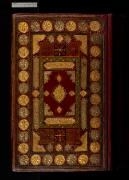
Shāhnāmah (MS Add.269)
A richly illuminated and almost complete copy of the Shahnamah with less than a page missing of its prose introduction, … more -
Mishnah (MS Add.470.1)
The text of the Mishnah describes the first written account of the early Jewish oral tradition and the earliest significant … more -
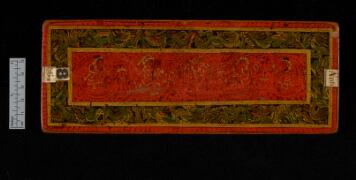
Kalāpustaka (MS Add.864)
A masterfully crafted 17th-century Nepalese accordion book, completely consisting of polychrome drawings, for a total of … more -
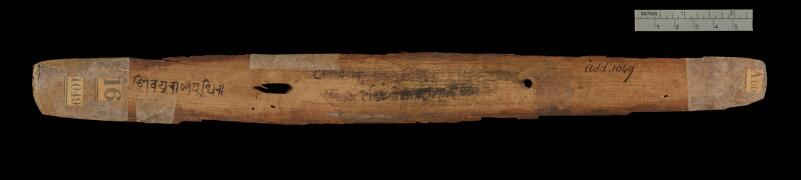
Pārameśvaratantra (MS Add.1049.1)
One of the oldest known dated Sanskrit manuscripts from South Asia, this specimen transmits a substantial portion of the … more -
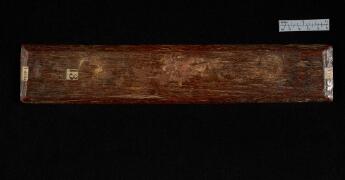
Rāmāṅkanāṭikā (MS Add.1409.1)
The palm-leaf autograph of the Rāmāṅkanāṭikā, a drama on the Rāma story written in Nepāla Saṃvat 480 (1360 CE), by the Buddhist … more -

Prajñāpāramitāstotra, Aṣṭasāhasrikā Prajñāpāramitā, Vajradhvajapariṇāmanā (MS Add.1643)
An 11th-century composite and multi-text manuscript containing three texts: Rāhulabhadra's Prajñāpāramitāstotra, the Aṣṭasāhasrikā … more -

Pañcarakṣā (MS Add.1688)
The Pañcarakṣā corpus ("Five Protections") consists of the Mahāpratisarā, Mahāmāyūrī, Mahāsāhasrapramardanī, Mahāmantrānusāriṇī, … more -
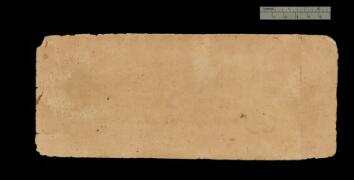
Kalpasūtra (MS Add.1765)
Traditionally attributed to Bhadrabāhu, the Kalpasūtra is a major canonical text of the ŚvetāmbaraJains, composed in Ardhamāgadhī … more -
Laboratory Notebook (MS Add. 3975)
Newton's notes on optics, precious stones, colours, temperatures, salts, medical matters, alchemy and other subjects, in … more -
Trinity College Notebook (MS Add. 3996)
Add. 3996 is a notebook that Newton used as a young student. Newton’s youthful interest in learning was encouraged by his … more -
Newton's Waste Book (MS Add. 4004)
The most cherished legacy that Newton received from his stepfather, Barnabas Smith (1582-1653), seems to have been this vast … more -
De discrimine adulatorio et amici (MS Add.6858)
In 1513, while he was at Cambridge, Erasmus dedicated to Henry VIII his translation from Greek into Latin of Plutarch's … more -
Sketchbook III (Add 7983)
Sketches made by Martens during his passage from England to South America, mainly prior to his joining of the Beagle crew … more -
Sketchbook I (Add 7984)
This sketchbook contains many of Martens' drawings and paintings from his time aboard the Beagle. They begin in January 1834, … more -
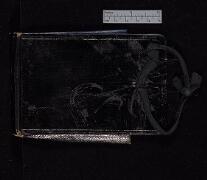
Journal, 26 June 1916-12 Aug. 1916 (MS Add.9852/1/7)
The volume is a ruled notebook and mostly comprises diary entries. It shows some signs of damp damage to the fore edge of … more -
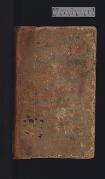
Nature printing (MS Add.10141)
This small volume of ‘nature printed’ leaves and flowers offers an intriguing insight into late eighteenth-century botany. … more -
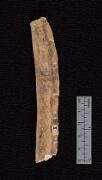
Chinese Oracle Bones (CUL.1,52,155)
Over three thousand years old, the Chinese Inscribed Oracle Bones in the Hopkins Collection are by far the oldest written … more -
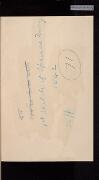
1842 Pencil Sketch; 1844 Essay Part 1, Draft A; and 1857 Outline of Species Theory: (DAR 6)
This item is included in the Library’s 600th anniversary exhibition Lines of Thought: Discoveries that changed the world … more -
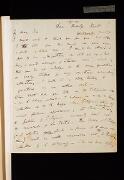
Letter from C. R. Darwin to J. D. Hooker [11 January 1844] (MS DAR 114: 3)
Queries on ratios of species to genera on southern islands. CD’s observations on distribution of Galapagos organisms, and … more -
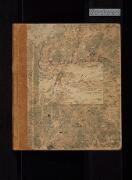
Experiment Book: (DAR 157a)
Transcription and apparatus © American Museum of Natural HistoryEditorial symbols … more -
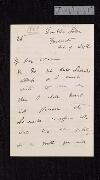
Miscellaneous letters from and to C. R. Darwin and others. Also individual leaves and fragments of Cirripedia and Origin,... (DAR 185)
This item is included in the Library’s 600th anniversary exhibition Lines of Thought: Discoveries that changed the world … more -
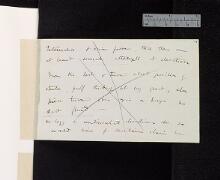
Excised leaves from Notebooks A (Geology), B-E , Torn Apart, and Summer 1842 (Transmutation): (DAR 208)
Transcription and apparatus © American Museum of Natural HistoryEditorial symbols … more -
Mathew Holmes lute book (Cambridge, University Library, MS Dd.2.11)
MS Dd.2.11 is the first and largest of four lute books, copied probably 1588-1595 by Mathew Holmes. Nine music manuscripts … more -
Breviary of Marie de Saint Pol (Cambridge, University Library, MS Dd.5.5)
This manuscript was owned, perhaps commissioned, by Marie de Saint Pol, countess of Pembroke (c. 1304-1377) and wife of Aymer … more -
Vie de seint Aedward le Rei (Cambridge, University Library, MS Ee.3.59)
This is the only known surviving copy of an illustrated Anglo-Norman verse Life of St Edward the Confessor, written in England … more -
Testaments of the Twelve Patriarchs (Cambridge, University Library, MS Ff.1.24)
This Greek manuscript, probably made in Constantinople in the late 10th or 11th century, was brought to England in the thirteenth … more -
Cambridge Juvencus (MS Ff.4.42)
Cambridge University Library Ms Ff.4.42, informally known as the Cambridge Juvencus Manuscript, principally contains a ninth-century … more -
Suehirogari (FJ.1000.23)
This scroll contains a story which describes the origin of the folding fan (扇子), using texts and colourful illustrations. … more -
Trilingual compendium of texts (MS Gg.1.1)
MS Gg.1.1 is a Trilingual compendium of texts put together in the early fourteenth century. It contains literary, historical, … more -
Book of Deer (MS Ii.6.32)
The Book of Deer (Evangelia) is a Gospel Book written in a hand that was current in the period c. 850-1000 and generally … more -
Letters, memoranda and journal containing the history of Mr William Gooch (Mm.6.48)
Letters and other documents relating to the life of William Gooch (1770-1792). The Board of Longitude appointed Gooch as … more -

Codex Bezae (Cambridge, University Library, MS Nn.2.41)
There are half-a-dozen ancient manuscripts which are the foundation of our understanding of the text of the New Testament … more -
ʻAjāʼib al-makhlūqāt (MS Nn.3.74)
A richly illuminated 16th Century [CE] copy of the Persian version of Qazwini's ʻAjāʼib al-makhlūqāt wa-gharāʼib al-mawjūdāt, … more -
al-Qurʼān (Nn.3.75)
Illuminated Qurʾān with two decorated medallions and two magnificent headpieces containing the Fātiḥa. The text of the Qurʾān … more -
Benedictional of Robert de Clercq (MS Nn.4.1)
A Benedictional contains blessings, prayers, and rites intended for the personal use of a bishop. This one was commissioned … more -
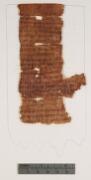
Nash Papyrus (MS Or.233)
The Nash Papyrus is a second-century BCE fragment containing the text of the Ten Commandments followed by the Šemaʿ. Prior … more -
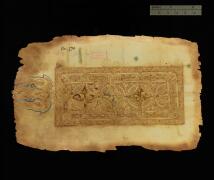
al-Qurʼān (MS Or.770)
Fragments of an Abbasid Qurʼān, probably written in the third century A.H / ninth century C.E., containing verses from the … more -
Properties of expanding universes / Stephen Hawking (PhD.5437)
Some implications and consequences of the expansion of the universe are examined. In Chapter 1 it is shown that this expansion … more -
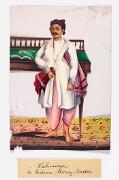
Paintings of native Indian figures on talc from Trichinopoly 1869 (RCMS 352)
The Royal Commonwealth Society (RCS) collections in Cambridge University Library contain a very attractive collection of … more -
Observations on HMS Resolution (RGO 14/59)
Observations from Captain Cook's [] second voyage to the South Pacific on the HMS Resolution [] from July 1772 until August … more -
Inventories of books, records and other movable property of the University (UA Collect. Admin. 4)
This is a volume of Inventories of books, records and other movable property of the University. From around 1300, the University's … more -
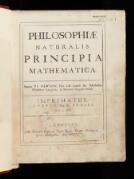
Philosophiæ naturalis principia mathematica (Adv.b.39.1)
A copy of the first edition of the Principia that Newton annotated in the margin and on interleaved sheets with his own amendments. … more -
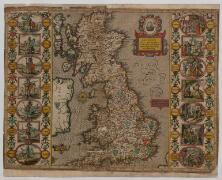
The theatre of the empire of Great Britaine: presenting an exact geography of the kingdomes of England, Scotland, Ireland,... (Atlas.2.61.1)
One of five known sets of proof maps prepared for John Speed's 'The Theatre of the Empire of Great Britaine', which was published … more -
On the origin of species by means of natural selection, or, The preservation of favoured races in the struggle for life (CCA.24.17)
Topping a list compiled by publishers, librarians and academic retailers, Charles Darwin’s On the origin of species has been … more -
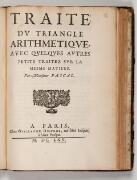
Traité du triangle arithmetique : auec quelques autres petits traitez sur la mesme matière (Item no. 2 in volume CCB.13.24)
In 1654 Blaise Pascal entered into correspondence with Pierre de Fermat of Toulouse about some problems in calculating the … more -
De humani corporis fabrica. Epitome (CCF.46.36)
The Epitome was a companion piece to the Seven books on the fabric of the human body (commonly known as the Fabrica, both … more -
Shi zhu zhai shu hua pu (FH.910.83-98)
This is the earliest Chinese book printed by the technique of polychrome xylography known as douban invented and perfected … more -
Nuremberg Chronicle (Inc.0.A.7.2[888])
The Liber Chronicarum by Hartmann Schedel printed in Nuremberg by Anton Koberger in 1493, or Nuremberg Chronicle as it is … more -
Gutenberg Bible (Inc.1.A.1.1[3761.1-2])
The Gutenberg Bible (better called Gutenberg-Fust Bible), the first large-scale production of the newly developed system … more -
[Apocalypsis Sancti Johannis cum figuris] (Inc.3[4245])
Blockbook printing, which in its purest form meant the production of books with text and pictures entirely printed from incised … more -
Ortus sanitatis (Inc.3.A.1.8[37])
This is the first natural history encyclopaedia. Today we consult such works to discover more about wonders of the world … more -
[Horae: ad usum Romanum (Rome): (French and Latin)] (Inc.5.D.1.19[2530])
This Book of Hours, printed on vellum, containing as its main texts the Offices of the Virgin Mary and of the Dead, is illustrated … more -
Titi Lucretii Cari De rerum natura libri sex (Montaigne.1.4.4)
This copy of Lucretius' poem De rerum natura (On the nature of things), edited by Denis Lambin and printed in Paris in 1563, … more -
Shakespeare First Folio (SSS.10.6)
Shakespeare based many of his plots on the lives and deaths of historical rulers: titles of his plays name one Roman emperor, … more -
Il Decamerone Di Messer Giovanni Bocchaccio Nvovamente Stampato Con Tre Novelle Aggivnte (5000.c.73)
This is a beautiful humanist edition of Boccaccio’s most famous work and one of the earliest with illustrations; the 101 … more -
A mervaylous discourse vpon the lyfe, deedes, and behaviours of Katherine de Medicis: Queene mother … (Adv.e.8.1)
This translation of an anonymous European bestseller was published in London in 1575 with a false imprint (‘At Heydelberge’). … more