Thomas Gray Manuscripts
When I expressed my astonishment at the extent of his reading he said, ‘Why should you be surprised, for I do nothing else.'" Norton Nicholls, Reminiscences of Thomas Gray, November 1805
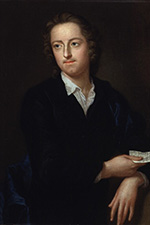
Thomas Gray (1716-1771) was a poet and scholar. He spent much of his life in the University of Cambridge, first at Peterhouse then at Pembroke College, although he also spent significant periods living in London and travelling the British Isles, and he accompanied his friend Horace Walpole (1717-1797) on a Grand Tour of Europe between 1739 and 1741. Throughout the 250 years that have passed since Gray’s death, he has primarily been celebrated as a poet, especially for his Elegy Written in a Country Church Yard (1751). While he lived, however, he was equally renowned for his scholarship: his friend William Johnson Temple speculated that he was ‘the most learned man in Europe’. Although Gray did not publish any of his research, he had a significant influence on intellectual as well as literary life in the mid-eighteenth century, and like many scholars of the period he shared his learning as well as his verse through correspondence and manuscript circulation among coterie networks. He was a polymath, and his research traversed British, European, and global fields of knowledge, ancient and modern, including literature, history, geography, philosophy, law, religion, politics, music, visual art, natural history, and architecture, often in the course of what felt to him like single, unified enquiries. His characteristic method was to make preliminary notes on loose leaves, in smaller notebooks, and in the margins of his books, then digest and present his work more formally in his three-volume folio Commonplace Book.
This collection presents digital images of Gray’s manuscripts held in the University of Cambridge and its Colleges, alongside related material from other collections. The images are accompanied by editorial and bibliographical metadata including commentary, collation, foliation, and content indexing prepared by the Editor, Ruth Abbott (University of Cambridge), and Associate Editor, Ephraim Levinson (University of Bristol), supported by an international Advisory Board. The commentaries to each item include peer-reviewed scholarly introductions generally ranging in length from 500 to 2000 words. The collection’s contents make it especially significant for understanding Gray’s research, note-taking, and record-keeping: it includes his three-volume Commonplace Book, his pocket books for 1755 and 1760, and his annotated copies of The Naturalist’s Journal , alongside rougher notes on loose leaves. It also contains several of Gray’s compositions in Latin, illuminating his education, and unique versions of his poems in Latin and English: the Commonplace Book versions of his poems are here made more accessible than ever before, and his second-published poem, ‘Luna est habitabilis’, can be seen in its original form for the first time. The research and imaging have been generously funded by the Cambridge English Faculty, Pembroke College, and the University of Cambridge, enabling unprecedented access to Gray’s scholarship, new understanding of its range and methods, and a fascinating case study in eighteenth-century intellectual life.
Ruth Abbott
University of Cambridge
https://cudl.lib.cam.ac.uk/collections/thomasgray
Advisory Board
Katharina Boehm, Chair of English Literature and Culture, University of Passau, Germany
Philip Connell, Professor of Literature and History, University of Cambridge, UK
Genny Grim, Librarian and Bye-Fellow, Pembroke College, Cambridge, UK
Estelle Haan, Emeritus Professor, Queen’s University, Belfast, UK
Huw Jones, Head of the Digital Library Unit and Digital Humanities Coordinator, University of Cambridge, UK
Peter Sabor, Distinguished James McGill Professor Emeritus, McGill University, Canada
Image © National Portrait Gallery, London. Thomas Gray by John Giles Eccardt. Oil on canvas, 1747-1748.

